A thoughtfully designed pooja room creates a calm and spiritually balanced environment while complementing the home’s overall aesthetics. Modern Indian homeowners now prefer pooja spaces that combine traditional elements with practical layouts, smart storage, and elegant finishes.
According to interior design trends observed across urban Indian homes, compact mandir units, marble finishes, wooden carvings, and soft lighting are among the most preferred choices for modern pooja room interiors. Designers also recommend incorporating Vastu-friendly placements, clutter-free layouts, and natural materials to maintain positivity and functionality.
Why Modern Homes Need Well-Planned Pooja Room Designs
A pooja room is not only a dedicated prayer area. It also influences the visual balance and emotional comfort of the home. A properly planned pooja unit helps:
- Create a peaceful atmosphere for daily rituals
- Improve space organization in compact homes
- Maintain spiritual privacy within modern layouts
- Add aesthetic value through elegant materials and lighting
- Support Vastu-based interior planning
Interior experts often suggest designating a clutter-free, naturally lit area for prayer spaces because calm environments enhance focus and mindfulness during meditation and prayer.
Top 08 Pooja Room Ideas for Indian Homes
At Shades & Shapes, our experience in designing residential interiors across Gujarat shows that homeowners increasingly look for customized Pooja room designs that blend seamlessly with contemporary living spaces without compromising spiritual value.
1. Choose the Right Location for the Pooja Room
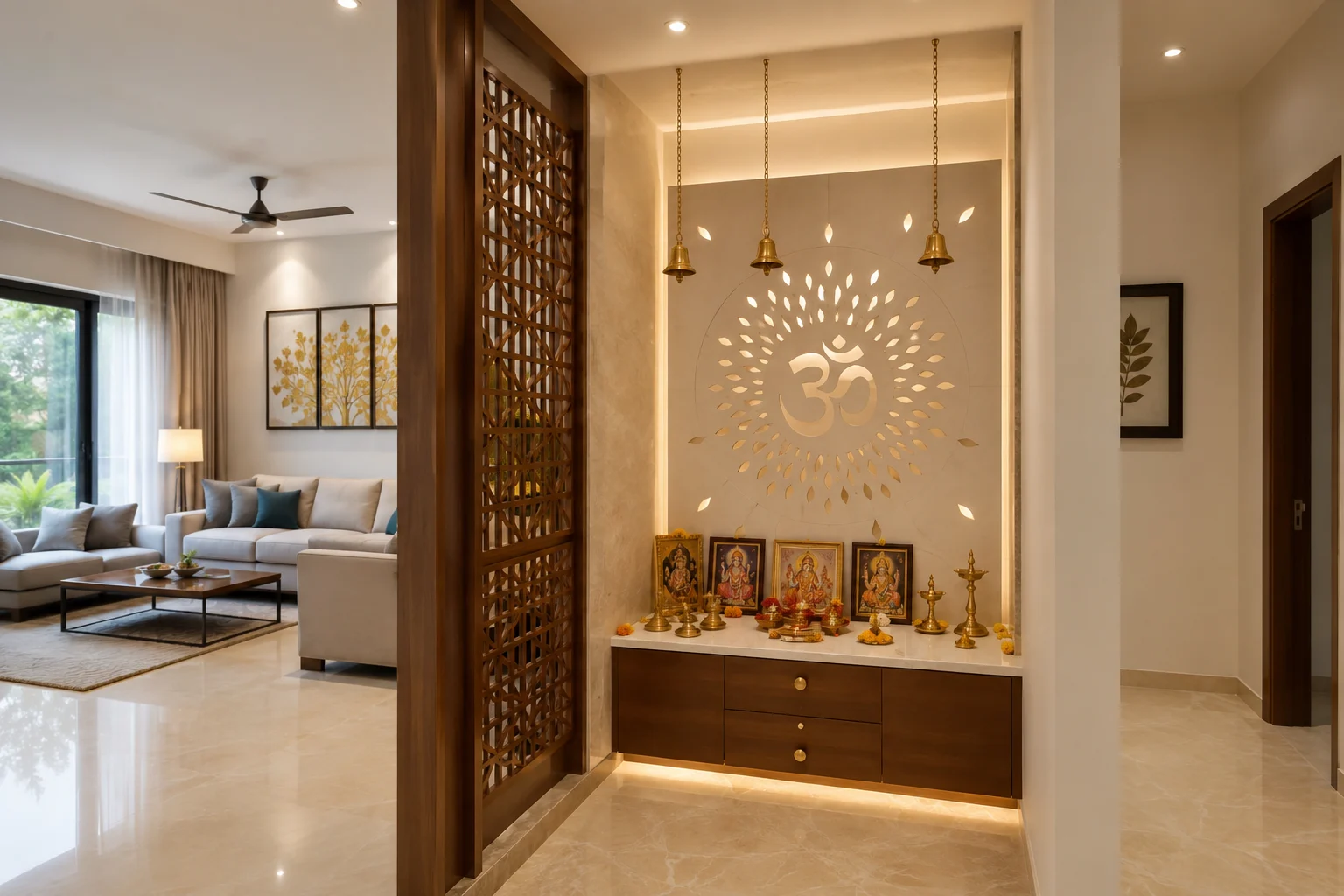
Select a Quiet and Comfortable Space
The location of the pooja room plays an important role in creating a calm prayer environment. Choose a peaceful area away from heavy movement and noise so the space feels relaxing during prayer and meditation.
Popular placement options in modern homes include:
- Living room corners
- Dedicated wall niches
- Small separate prayer rooms
- Passage-side mandir units
Follow Basic Vastu Guidelines
Many homeowners prefer Vastu-based placements while planning pooja room designs. According to common Vastu recommendations:
- The northeast corner is considered ideal for pooja rooms
- Idols should generally face east or west
- Avoid placing the mandir beside bathrooms or directly under staircases
Proper placement creates a balanced and spiritually comfortable environment.
2. Wooden Pooja Room Designs for Timeless Appeal
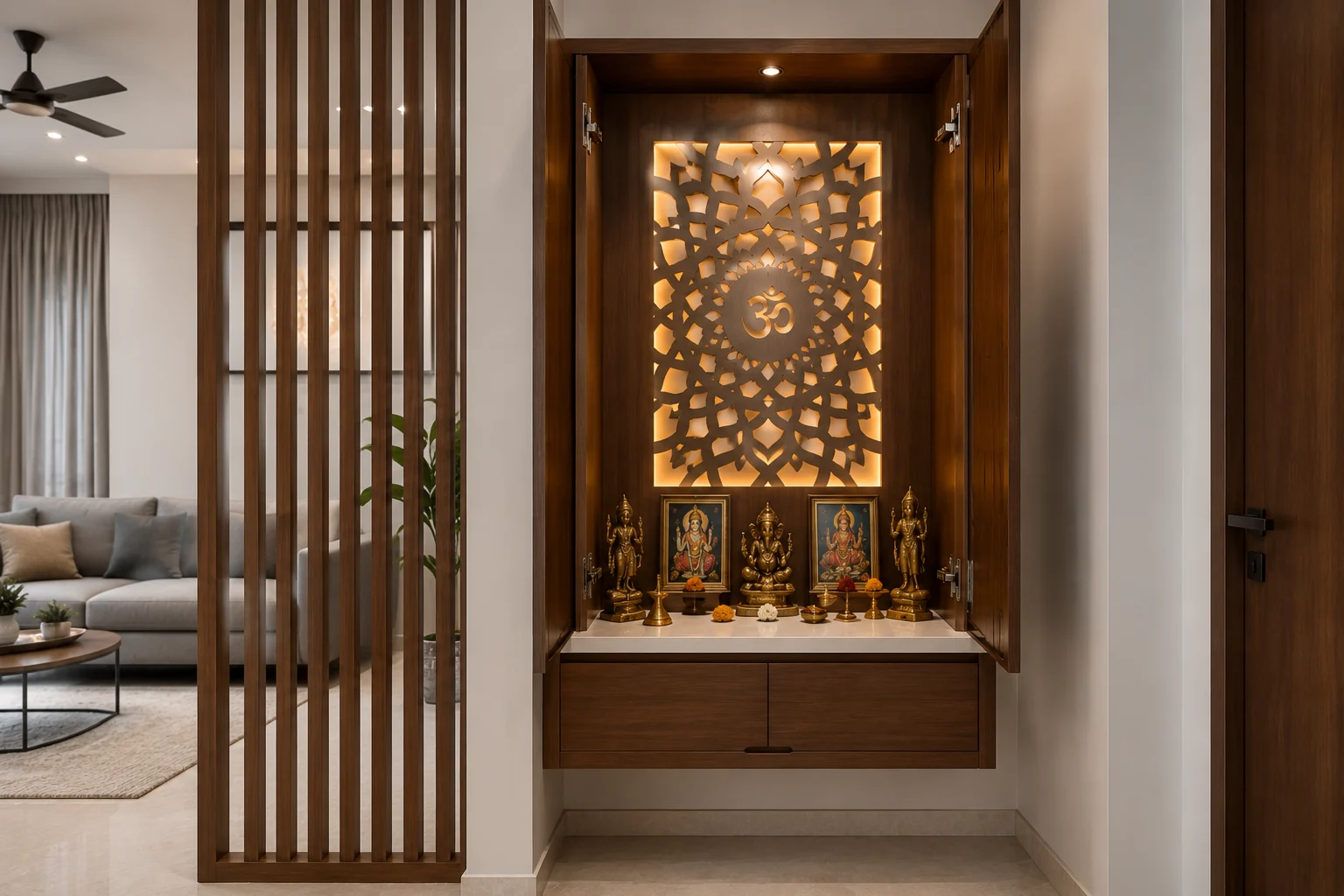
Wooden Mandirs Add Warmth and Tradition
Wooden mandirs remain one of the most popular choices for Indian homes because they bring warmth, elegance, and a traditional touch to modern interiors.
Popular wood materials include:
- Teak wood
- Sheesham wood
- Engineered wood with a laminate finish
Many modern homes also use carved wooden panels and CNC-cut designs to give the pooja area a refined appearance.
Wall-Mounted Mandirs for Small Homes
Compact wall-mounted mandirs are ideal for apartments where floor space is limited. These designs help:
- Save space
- Keep interiors visually clean
- Add built-in storage drawers
- Blend easily with modern living room interiors
3. Marble Pooja Room Ideas for Premium Interiors
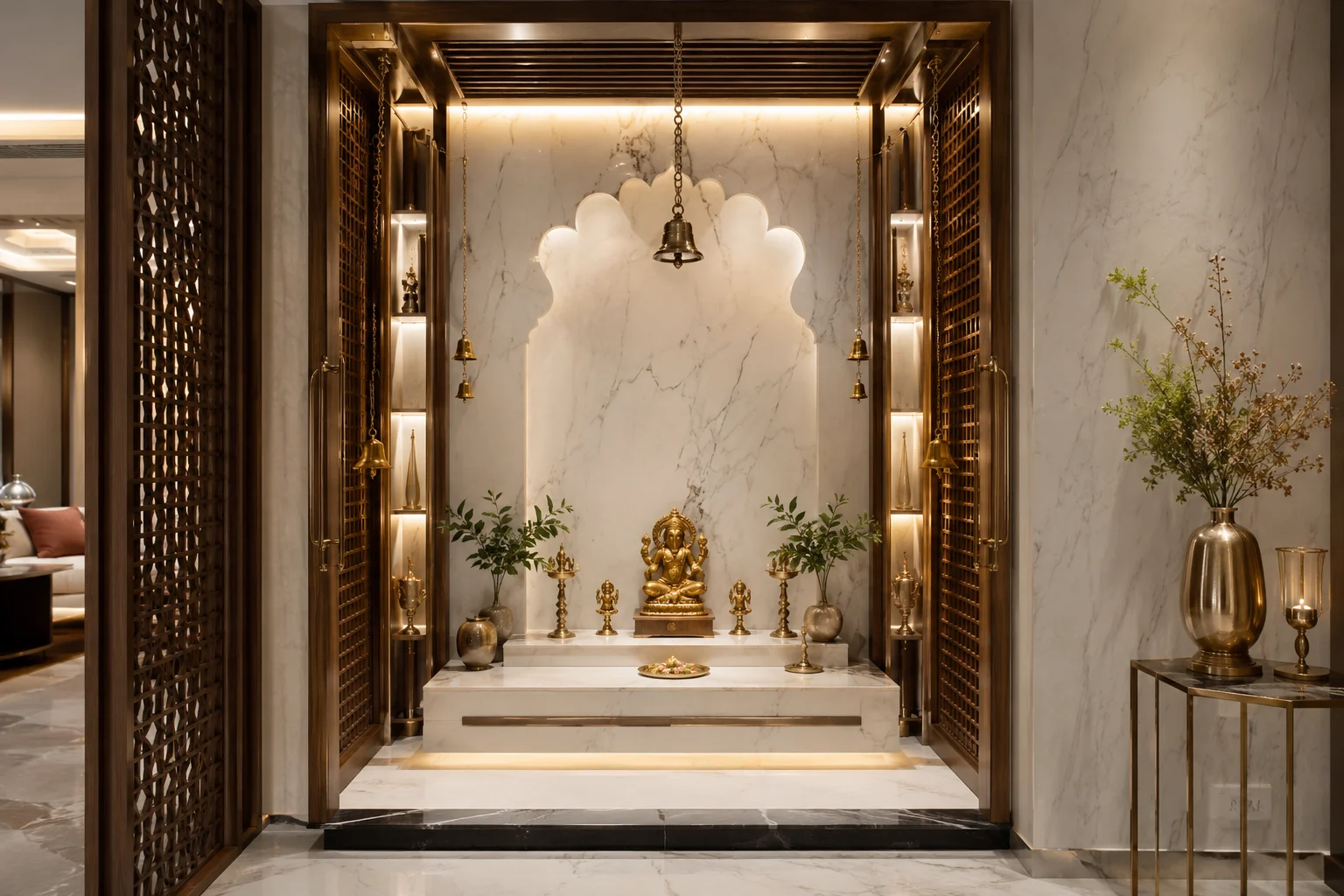
Marble Creates a Clean and Elegant Look
Marble pooja units are widely used in luxury interiors because they look elegant and require less maintenance. White marble is especially popular, as it reflects light beautifully and creates a calm atmosphere.
Common marble choices include:
- White Makrana marble
- Italian marble
- Backlit marble panels
Combine Marble with Wood and Brass
Modern pooja rooms often combine marble with wooden detailing, brass bells, and warm lighting. This combination creates a perfect balance between traditional and contemporary interior design.
4. Lighting Ideas for Modern Pooja Rooms
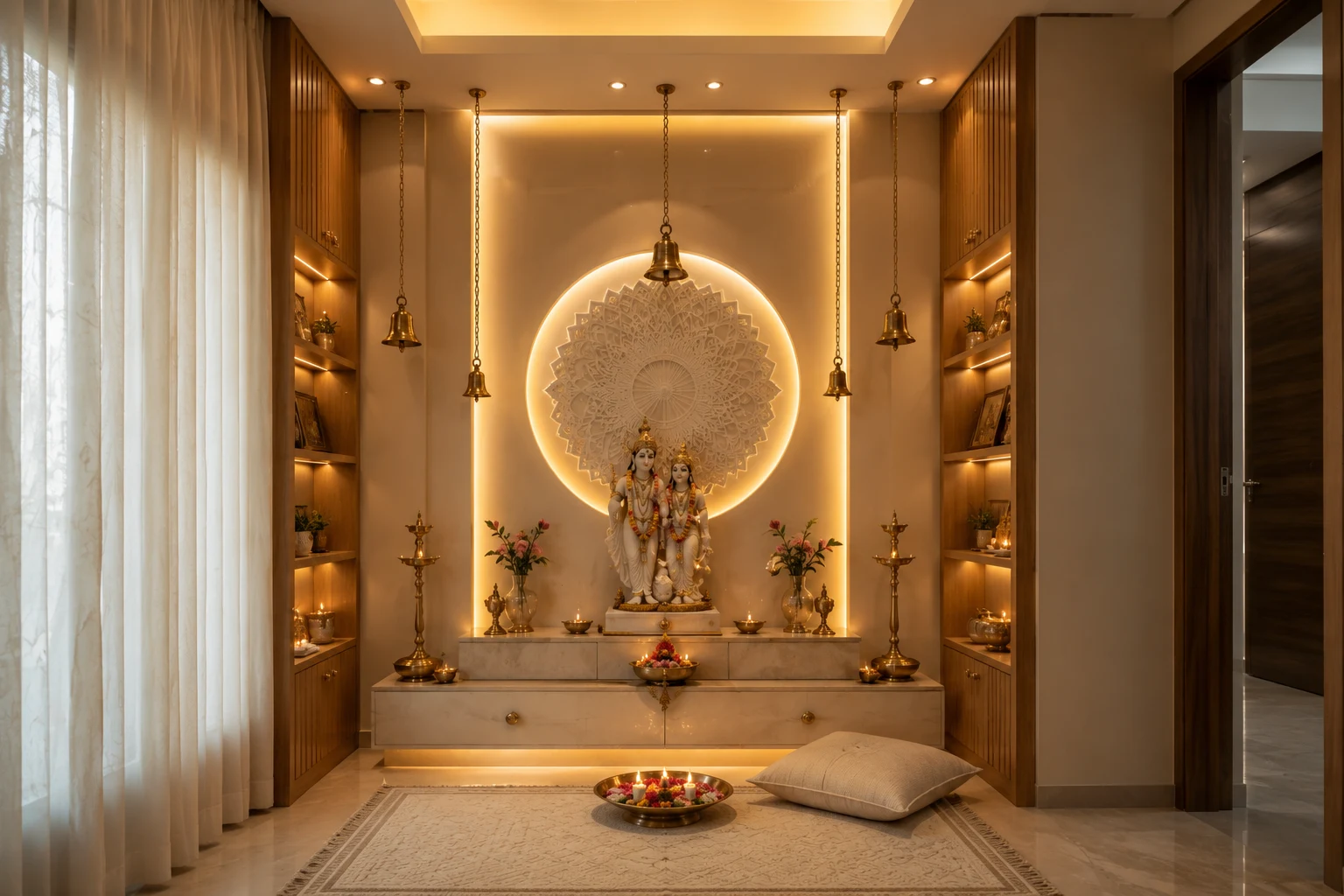
Use soft, warm lighting.
Lighting strongly affects the mood of a pooja room. Warm lighting creates a peaceful and comfortable prayer environment without making the space feel too bright.
Popular lighting options include:
- LED strip lights
- Hanging brass lamps
- Recessed ceiling lights
- Backlit wall panels
Backlit Panels Add a Premium Touch
Backlit marble or acrylic panels behind idols help highlight the focal area of the pooja room. This design style is increasingly popular in modern apartments and luxury homes.
5. Best Color Combinations for Pooja Room Designs
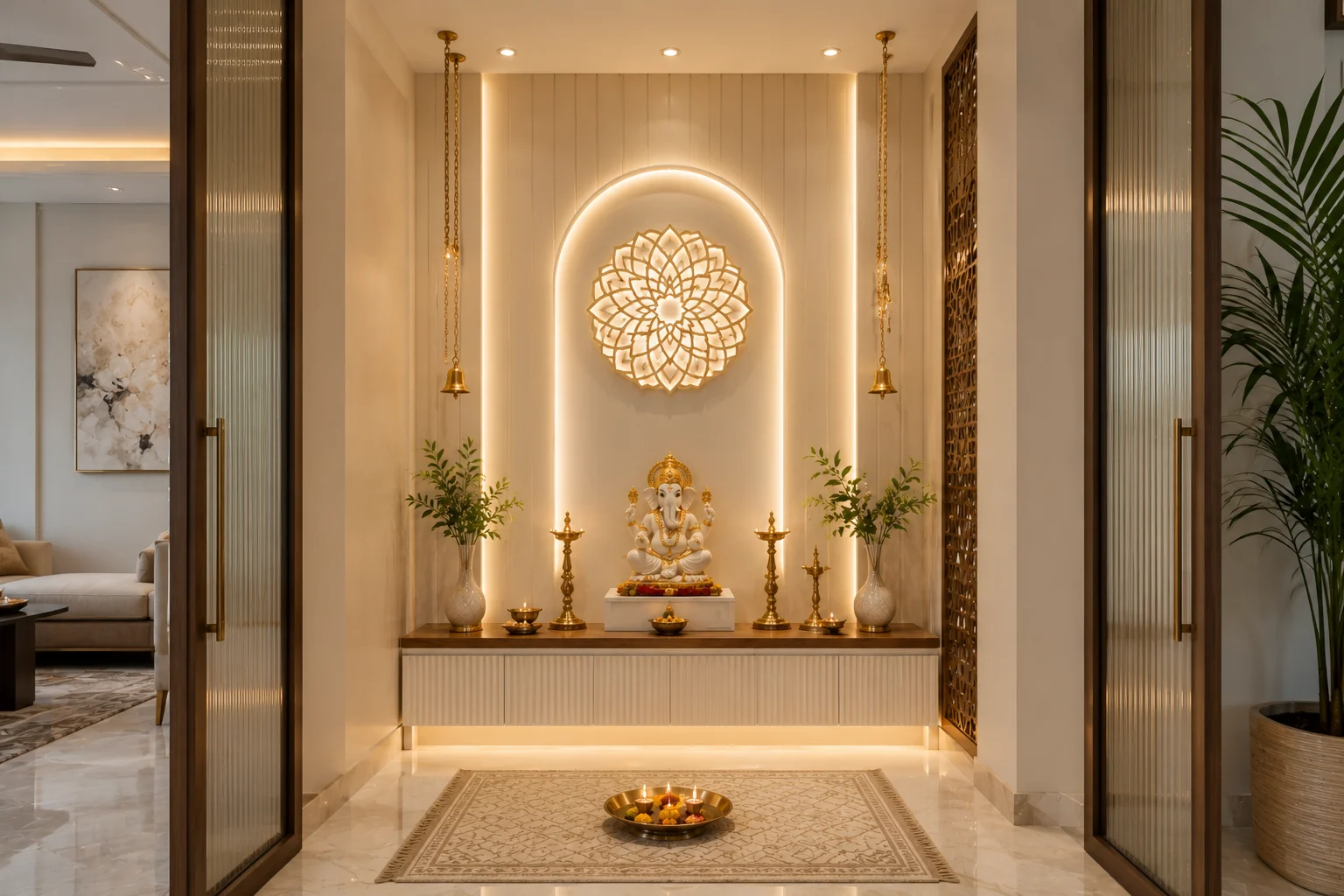
Neutral Shades Create a Peaceful Feel
Soft colors make pooja rooms look bright, clean, and spacious. Interior designers commonly recommend shades like:
- White
- Beige
- Ivory
- Light yellow
- Sand tones
These colors help create a calm and spiritually balanced atmosphere.
Gold Accents Add Traditional Elegance
Gold detailing on temple doors, bells, borders, or jaali panels adds a traditional and premium touch without making the space look overcrowded.
6. Smart Storage Ideas for Pooja Rooms
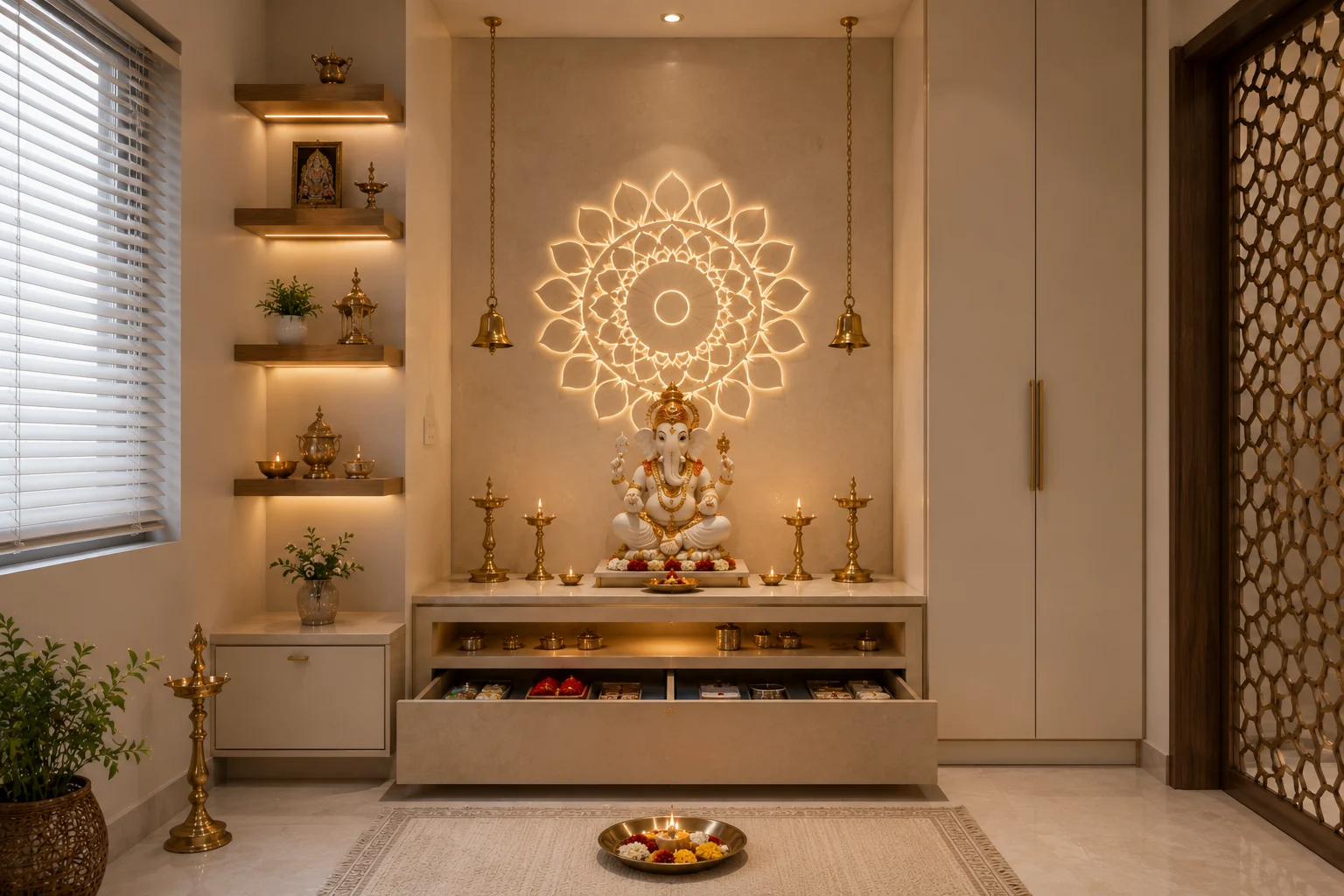
Hidden Storage Keeps the Area Organized
Modern pooja units often include smart storage solutions to maintain cleanliness and avoid clutter.
Useful storage options include:
- Pull-out drawers
- Floating shelves
- Closed cabinets
- Storage benches
These storage units help organize prayer books, diyas, incense sticks, and other pooja essentials neatly.
Floating Shelves Save Space
Floating shelves are especially useful in compact homes because they increase storage without occupying additional floor space.
7. Compact Pooja Room Ideas for Apartments
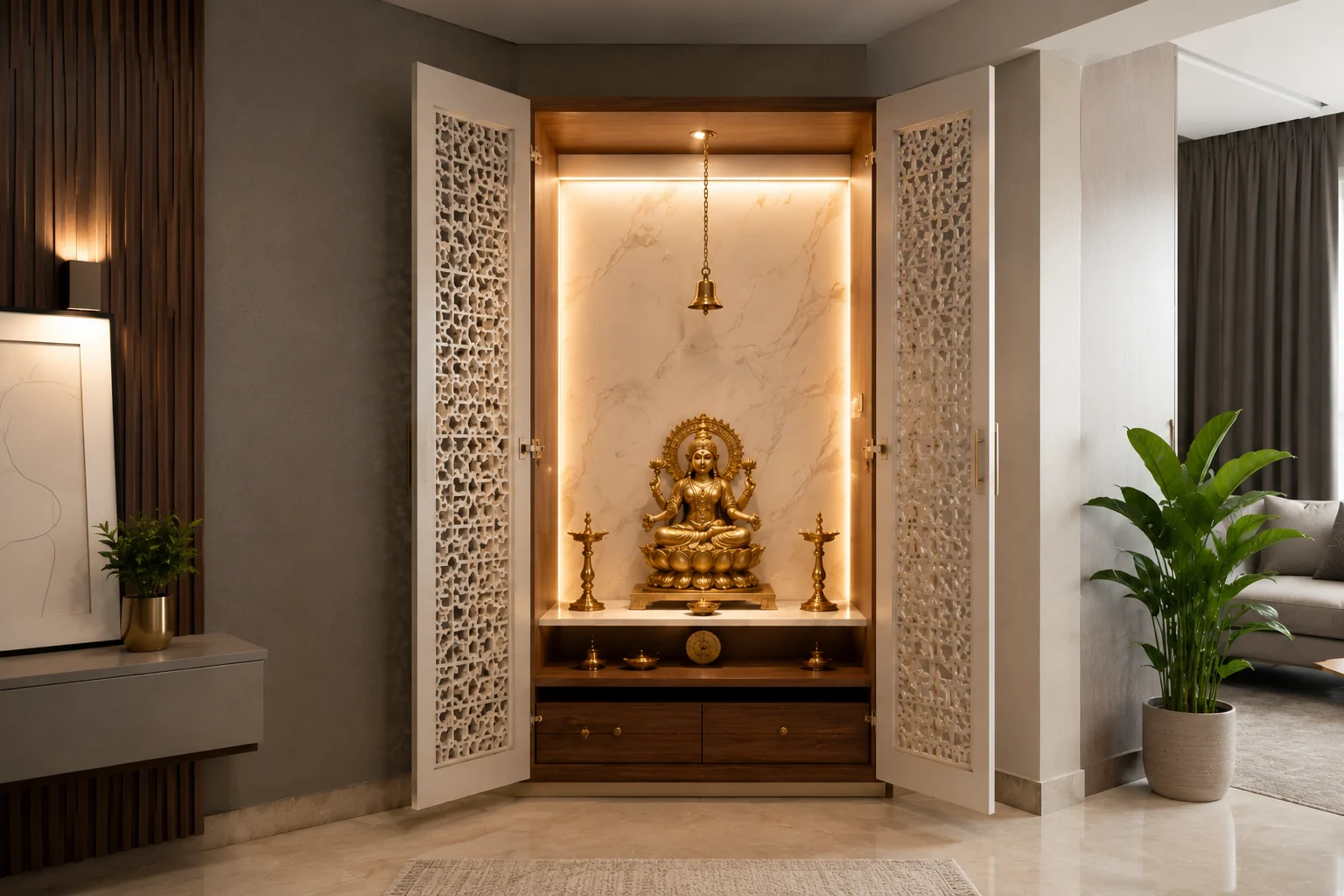
Corner Pooja Units Maximize Small Spaces
Corner mandir units are practical for apartments where dedicated prayer rooms are not possible. They help:
- Utilize unused corners efficiently
- Save floor space
- Blend smoothly with the living room interiors
Sliding Doors Improve Functionality
Sliding or foldable shutters help maintain cleanliness and privacy while saving space. Frosted glass and decorative jaali-pattern doors are commonly used in modern apartment interiors.
8. Decorative Elements That Enhance Pooja Room Designs
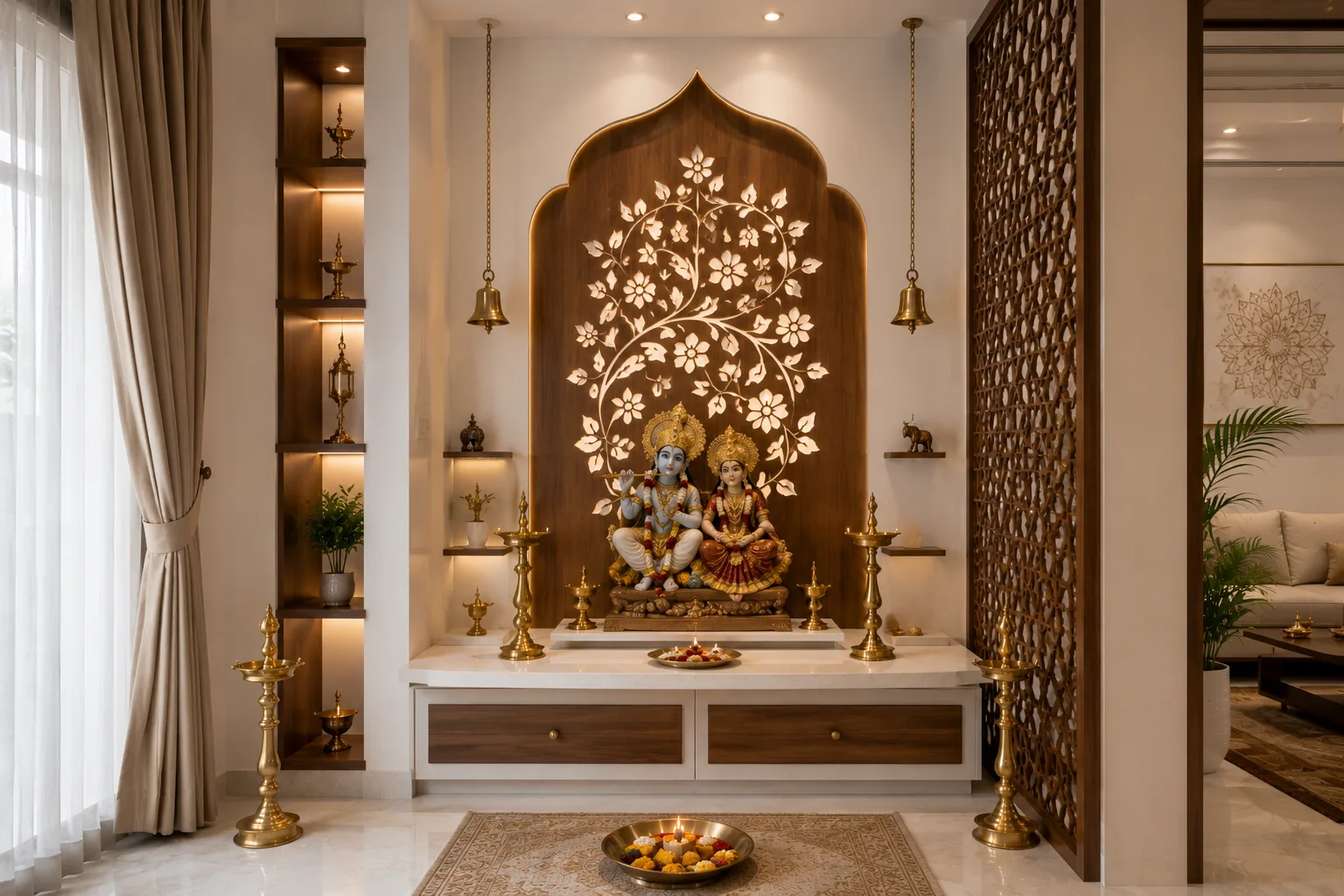
Jaali Panels Add Elegant Detailing
Wooden or laser-cut jaali partitions improve the visual appeal of the pooja area while maintaining openness and ventilation.
Traditional Accessories Complete the Space
Decorative items such as brass diyas, bells, and floral carvings help preserve the traditional feel of Indian pooja rooms.
Avoid excessive decoration, as clutter can reduce the peaceful and balanced appearance of the prayer space.
Common Mistakes to Avoid in Pooja Room Design
Many homeowners focus only on decoration and overlook functionality. Avoid these common mistakes:
- Poor ventilation inside enclosed pooja units
- Excessive decorative lighting
- Overcrowded shelves and accessories
- Incorrect idol placement
- Insufficient storage planning
- Using dark colors in compact spaces
A clean and balanced layout always improves the spiritual and visual experience.
Best Materials for Pooja Room Designs
Material | Benefits | Best Use |
Wood | Traditional appearance and warmth | Mandir structures |
Marble | Premium and low maintenance | Flooring and back panels |
Brass | Traditional decorative appeal | Bells and accessories |
Glass | Modern aesthetic look | Sliding shutters |
Stone | Natural texture and durability | Accent walls |
Conclusion
Well-planned Pooja room designs improve both the spiritual atmosphere and the visual appeal of modern homes. Whether you prefer a compact wall-mounted mandir, a luxurious marble pooja room, or a minimalist wooden unit, the right combination of layout, lighting, materials, and storage creates a peaceful prayer environment.
Modern homeowners increasingly choose practical and elegant Pooja room ideas that align with contemporary interiors while preserving traditional values. With smart planning and professional interior design, even small homes can include beautiful and functional pooja spaces that feel calm, organized, and spiritually uplifting.
FAQs
Which material is best for pooja room designs?
Wood and marble are the most preferred materials because they offer durability, elegance, and traditional appeal.
What is the best pooja room design for small homes?
Wall-mounted mandirs, floating shelves, and corner pooja units work best for compact apartments.
Which colors are ideal for pooja room interiors?
White, beige, cream, and light yellow shades create a calm and spiritually balanced atmosphere.
Which direction is best for a pooja room?
The northeast direction is commonly recommended according to Vastu principles for pooja room placement.
How can I make my pooja room look modern?
Use minimalist layouts, warm lighting, hidden storage, marble finishes, and clean decorative elements for a modern appearance.