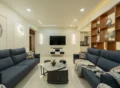
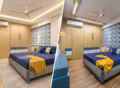
Have you ever noticed that a room looks beautiful during the day but feels completely different after the lights are switched on? A bedroom may feel too harsh, a kitchen may create shadows on the countertop, or a living room may be bright but still lack warmth. The problem is usually not the number of lights, it is choosing the wrong type, colour temperature, or placement.
This home interior lighting guide gives you a practical way to choose the right lighting for every room. You will understand which light works best, where to place it, what colour temperature to choose, and what mistakes to avoid before making your final decision.
Start With These 3 Lighting Principles
Before choosing lights for any room, understand these three basic layers.
1. Ambient Lighting: This is the main light that brightens the overall room. Recessed lights, ceiling lights, chandeliers, and cove lighting are common examples.
2. Task Lighting: Task lighting provides focused brightness where you perform specific activities. Examples include reading lamps, desk lamps, under-cabinet kitchen lights, and mirror lights.
3. Accent Lighting: Accent lighting highlights specific features such as a textured wall, artwork, display unit, or architectural element. It adds depth and prevents the interior from looking flat.
The simple rule: Use ambient lighting for the overall room, task lighting where you work, and accent lighting to highlight important features.
Understand Kelvin Before Choosing Your Lights
Colour temperature is measured in Kelvin (K). This is one of the easiest ways to decide which light is suitable for a room.
| Light Type | Kelvin Range | Best For |
|---|---|---|
| Warm White | 2700K–3000K | Bedrooms, living and dining rooms |
| Neutral White | 3500K–4000K | Kitchens, bathrooms and workspaces |
| Cool White | 4000K–5000K | Utility and task-focused areas |
Quick rule: Choose warm light for relaxation and neutral light for activities that require better visibility.
Room-by-Room Lighting Selection Guide
Every room has a different purpose, so using the same lighting throughout the home is not always the best choice. Use the following guide to understand which light to choose, what colour temperature works best, and where each light should be placed.
1. Living Room Lighting: What Works Best?
The living room is used for relaxing, watching television, reading, and spending time with guests. Because of this, it needs flexible lighting instead of one powerful ceiling light.
Best lighting setup:
- Main light: Recessed lights, chandelier or ceiling fixture
- Best colour: 2700K–3000K
- Add: Floor lamps or table lamps near seating
- For décor: Wall washers or lights for artwork and display units
If you have a false ceiling, combine downlights with indirect cove lighting. This creates a softer atmosphere and gives you better control over brightness. For a complete home design, lighting should also be planned alongside the furniture layout, ceiling design, and overall residential interior design.
Avoid: Installing too many bright spotlights directly above the sofa or opposite the television screen.
Best choice: Warm ambient lighting with separate lamps gives the living room the most flexibility.
2. Bedroom Lighting: Keep It Soft and Comfortable
A bedroom should feel calm, not overly bright. Harsh white lights may provide visibility, but they often make the room feel less relaxing.
Best lighting setup:
- Main light: Soft ceiling light or indirect cove lighting
- Best colour: 2700K–3000K
- Add: Bedside reading lights
- Wardrobe area: Neutral lighting for better visibility
Place bedside lights where they illuminate your reading area without shining directly into your eyes. For wardrobes, add proper internal or external lighting so clothes and colours are easier to see.
Avoid: Powerful downlights directly above the bed.
Best choice: Warm dimmable lighting combined with bedside task lights.
3. Kitchen Lighting: Bright Where You Work
The kitchen needs more than a bright ceiling light. While cooking, your body can block overhead light and create shadows on the countertop.
Best lighting setup:
- Main light: Even ceiling lighting
- Best colour: 3500K–4000K
- Most important addition: Under-cabinet task lighting
- Island or breakfast counter: Pendant lights
- For better visibility: Use good-quality lighting with clear colour rendering
Under-cabinet lighting directly illuminates the countertop and makes food preparation easier. If you have a modular kitchen with glossy surfaces, choose fixtures carefully to avoid unwanted reflections.
Avoid: Depending only on one central ceiling fixture.
Best choice: Neutral ambient lighting combined with focused under-cabinet lights.
4. Bathroom Lighting: Avoid Shadows Around the Mirror
Bathroom lighting should provide clear visibility, especially near the mirror. A single overhead light can create shadows on the face.
Best lighting setup:
- Main light: Even ceiling lighting
- Mirror area: Side lighting or evenly distributed vanity lighting
- Best colour: 3000K–4000K
- Priority: Good colour rendering for natural-looking skin tones
Place lighting so the face receives even illumination from the front or sides.
Avoid: Using only a powerful light directly above the mirror.
Best choice: A balanced combination of ceiling and mirror lighting.
5. Dining Room Lighting: Create a Focus Around the Table
The dining area does not need extremely bright lighting. The main objective is to create a comfortable atmosphere around the table.
Best lighting setup:
- Main feature: Pendant light or chandelier above the dining table
- Best colour: 2700K–3000K
- Extra option: Dimmer control
The size and height of the fixture should match the dining table and room proportions. A dimmer is especially useful because the brightness you want for a family breakfast may be different from an evening dinner.
Avoid: Using a fixture that is too small or placing it away from the table’s centre.
Best choice: A warm pendant light with adjustable brightness.
6. Study or Home Office Lighting: Reduce Glare and Shadows
A workspace needs clear and comfortable lighting. The goal is not to make the entire room extremely bright but to provide enough focused light where you actually work.
Best lighting setup:
- Main light: Even ambient lighting
- Desk: Adjustable task lamp
- Best colour: 3500K–4000K
- For screens: Position lights to reduce reflections and glare
If you write by hand, place the task light so your hand does not create a shadow on the working surface. If you work on a computer, avoid placing a bright light directly in front of or behind the screen.
Avoid: Using only a powerful overhead light for the entire workspace.
Best choice: Neutral ambient lighting combined with a separate desk lamp.
7. Pooja Room Lighting: Keep the Space Warm and Peaceful
The pooja room should feel calm and focused. Lighting can highlight the mandir while maintaining a peaceful atmosphere.
Best lighting setup:
- Main light: Soft ambient lighting
- Highlight: Focused light for the mandir
- Best colour: 2700K–3000K
- Suitable options: Warm LED strips or subtle spotlights
Warm lighting usually works well with wooden finishes, marble, brass and traditional décor.
Avoid: Too many powerful spotlights in a small space.
Best choice: Soft warm lighting with one focused highlight.
8. Hallway and Staircase Lighting: Focus on Safety
Hallways and staircases need even lighting so people can move comfortably. These areas are often overlooked during interior planning.
Best lighting setup:
- Hallway: Evenly spaced ceiling or wall lights
- Staircase: Step lights or wall-mounted lighting
- Best colour: 3000K–4000K
Soft lighting can improve the appearance of these connecting spaces while still providing enough visibility.
Avoid: Leaving dark corners or unevenly lit stairs.
Best choice: Glare-free lighting placed along the movement path.
Choose Lighting Based on Your Interior Colours
Your wall colours, furniture finishes, and materials can change how a light looks inside the room. Before finalising all fixtures, consider the overall colour palette of your interior.
Light-Coloured Interiors: White, cream, and pastel interiors reflect more light, so you may not need excessively powerful fixtures. Warm or neutral lighting generally works well, while very cool white light can sometimes make the space feel too clinical.
Dark-Coloured Interiors: Dark walls, deep wooden finishes, and darker furniture absorb more light. Instead of installing one extremely bright fixture, use multiple lighting layers to distribute brightness evenly.
Warm-Toned Interiors: Wood, beige, terracotta, and gold finishes generally work well with 2700K–3000K warm lighting. This combination creates a comfortable and cohesive look.
Grey and Neutral Interiors: Grey, white, and modern neutral interiors can work with both warm and neutral lighting. Choose the colour temperature based on whether you want the room to feel cosy or brighter and more contemporary.
Quick tip: Always test a sample light against your actual wall colour and material finishes before purchasing all fixtures for the home.
Quick Room-by-Room Lighting Guide
| Room | Best Light | Recommended Colour |
| Living Room | Ambient + accent | 2700K–3000K |
| Bedroom | Ambient + bedside lights | 2700K–3000K |
| Kitchen | Ceiling + under-cabinet | 3500K–4000K |
| Bathroom | Ceiling + mirror lights | 3000K–4000K |
| Dining Room | Pendant + ambient | 2700K–3000K |
| Study Room | Ambient + desk lamp | 3500K–4000K |
| Pooja Room | Warm ambient + accent | 2700K–3000K |
| Hallway/Stairs | Even safety lighting | 3000K–4000K |
Common Lighting Mistakes to Avoid
Many lighting problems can be avoided with better planning. Keep these points in mind:
- Do not use the same light colour throughout the house.
- Do not depend entirely on one central ceiling light.
- Do not install downlights without considering furniture placement.
- Do not ignore shadows in kitchens and bathrooms.
- Do not select decorative fixtures only for appearance.
- Do not forget dimmers in bedrooms, living rooms and dining areas.
- Do not finalise electrical points before planning furniture and lighting placement.
Conclusion
Choosing the right lighting becomes easier when you start with how each room is actually used. Bedrooms need comfort, kitchens need clear visibility, study areas need focused task lighting, and living rooms need flexibility.
The best home interior lighting guide is not about adding more lights. It is about choosing the right combination of ambient, task, and accent lighting based on your room, interior colours, furniture layout, and daily needs.
If you are planning a home interior in Ahmedabad, it is better to finalise the lighting plan along with the layout, furniture, false ceiling, and electrical points. At Shades & Shapes, our interior design approach considers these elements together to create spaces that are both functional and visually balanced.
A professional residential interior designer can help bring these decisions together before execution begins.
FAQs
Which light colour is best for the entire home?
There is no single colour that works best everywhere. Use 2700K–3000K for relaxing areas and 3500K–4000K for kitchens, bathrooms and workspaces.
Is warm white better for a bedroom?
Yes. Warm white lighting between 2700K and 3000K is generally a comfortable choice for bedrooms because it creates a softer atmosphere.
What is the best light for a kitchen?
Use neutral ceiling lighting combined with under-cabinet task lights. This helps reduce shadows on the countertop.
How many lights does a living room need?
It depends on the room size, but a good living room usually combines general ambient lighting with at least one task or accent lighting source.
Should I install dimmable lights at home?
Dimmable lights are especially useful in bedrooms, living rooms and dining areas because they allow you to adjust the brightness based on the activity and time of day.