Choosing the right flooring depends on your home’s style, daily use, maintenance needs, and budget. Marble offers natural luxury, granite provides durability, while porcelain and vitrified tiles offer design flexibility and easier maintenance.
The best flooring can also vary from room to room. Consider foot traffic, water exposure, maintenance, and overall interior design before choosing the right material for your home.
Marble vs Granite vs Tiles: Quick Answer
Marble is best for natural luxury, granite for durability, and tiles for design flexibility and easy maintenance. You can also combine different flooring materials across rooms to match each space’s function and design.
| Flooring | Best For | Maintenance | Main Advantage |
|---|---|---|---|
| Marble | Luxury living spaces, foyers and dining areas | Moderate to High | Natural veining and premium appearance |
| Granite | Kitchens, entrances and high-traffic areas | Moderate | Strength and durability |
| Porcelain/Vitrified Tiles | Most rooms | Low | Design flexibility and easy maintenance |
| Marble-Look Tiles | Modern marble-style interiors | Low | Marble-inspired look with consistent patterns |
What Are Marble, Granite and Tiles?
Each flooring material has its own strengths, appearance and maintenance needs. Understanding these differences can help you choose the right option for each room.
Marble: Best When Luxury Matters
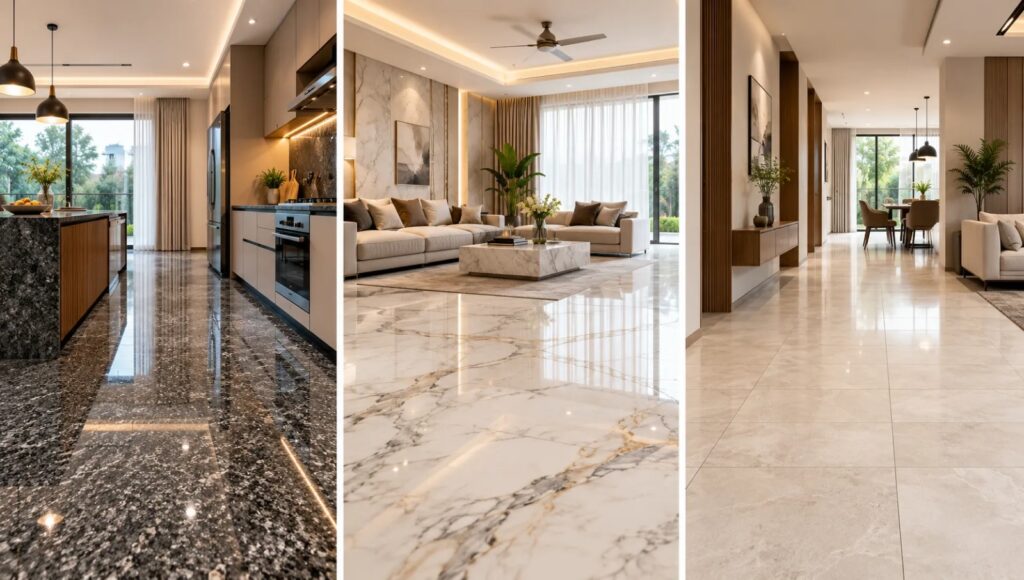
Marble is a natural stone known for its unique veining, colour variation and premium appearance. It works especially well in living rooms, foyers and dining areas where you want the flooring to become a design feature.
Every marble slab can have different patterns and tones, giving your home a distinctive look. However, marble needs more care than many manufactured flooring options, especially to protect it from stains and surface damage.
Choose Marble If:
- You want a luxurious natural-stone look.
- Unique veining is important to your design.
- You want flooring that makes a visual statement.
- You are comfortable with regular maintenance.
Granite: Choose It for Durability
Granite is a hard natural stone known for its strength and durability. It works well in entrances, corridors, kitchens, staircases and other areas with regular foot traffic.
Its natural colours and patterns can also add character to an interior. Choose a simpler granite pattern if your furniture, walls or ceiling already have detailed designs.
Choose Granite If:
- Durability is your main priority.
- Your flooring receives heavy daily traffic.
- You want genuine natural stone.
- You need a practical option for busy areas.
Tiles: The Most Flexible Option
Tiles offer a wide range of colours, patterns, textures and finishes. Porcelain and vitrified tiles can also replicate the appearance of marble, wood and concrete while offering consistent designs and easy routine maintenance.
Large-format tiles can work well in living rooms, wood-look tiles can add warmth to bedrooms, and suitable floor tiles can be used in bathrooms and other wet areas.
Choose Tiles If:
- You want a wide range of designs and finishes.
- You prefer consistent patterns.
- Easy maintenance is important.
- You want different flooring styles for different rooms.
- You like marble, wood or concrete-inspired looks.
Which Flooring Works Best in Each Room?
| Room | Suitable Options | Main Consideration |
|---|---|---|
| Living Room | Marble / Porcelain | Appearance and design |
| Dining Area | Marble / Granite / Tiles | Traffic and maintenance |
| Bedroom | Tiles / Marble / Wood-look Tiles | Comfort and warmth |
| Kitchen | Granite / Suitable Tiles | Cleaning and daily use |
| Bathroom | Suitable Floor Tiles | Water and slip considerations |
| Entrance | Granite / Durable Tiles | Foot traffic |
| Staircase | Marble / Granite / Tiles | Durability and design |
You do not need to use the same material throughout your home. Coordinating different flooring options according to each room’s function can provide better performance and a more balanced interior.
5 Flooring Mistakes to Avoid
1. Choosing Flooring From a Small Sample
A small sample can look very different when installed across an entire room.
Whenever possible, review larger samples or multiple natural-stone slabs before making your final decision. Check them under the lighting conditions of your actual home.
2. Choosing Bathroom Flooring Only for Looks
A bathroom floor needs to handle regular water exposure.
Instead of choosing a tile only because it looks attractive, consider whether it is suitable for wet areas and whether its surface provides appropriate slip characteristics.
3. Comparing Only Material Prices
A low material price does not always mean a lower project cost.
Include wastage, cutting, installation, grout, skirting and finishing when comparing flooring options.
4. Ignoring the Rest of the Interior
Your flooring should work with your furniture, wall colours, lighting, doors and ceiling design.
A highly patterned floor can make an already detailed room feel visually busy, while a simple floor can help highlight statement furniture or architectural features.
5. Using One Material Everywhere
Living rooms, bedrooms, kitchens and bathrooms have different requirements.
Using coordinated flooring materials instead of forcing one material throughout the home can provide better performance while maintaining visual continuity.
How to Choose the Right Flooring
Before finalising your flooring, ask yourself these questions:
- How much daily traffic will the room receive?
- Will the floor regularly be exposed to water?
- How much maintenance am I comfortable with?
- Do I prefer natural variation or a consistent pattern?
- Does the flooring complement my furniture and wall finishes?
- What is my complete installed budget?
- Will the flooring still suit my interior design if I change furniture later?
- Is the selected material suitable for the room’s specific use?
These questions can quickly narrow down the right flooring options for each space.
Interior Designer Tip: Don’t Choose Flooring in Isolation
Your flooring should be selected as part of the complete interior design. The team at Shades & Shapes considers flooring, furniture, colours, lighting and finishes together to create a balanced and functional space.
Before finalising a material, compare it with your furniture, wall colours, lighting, kitchen finishes, doors and ceiling design. For natural stone, review multiple slabs to understand variations in colour and veining, while for tiles, check several pieces together to see the overall pattern and finish.
So, Which Flooring Should You Choose?
Choose Marble when you want natural luxury, unique veining and a premium look.
Choose Granite when durability and heavy everyday use are your priorities.
Choose Tiles when you want design flexibility, consistent patterns and easier maintenance.
Choose Marble-Look Porcelain when you want a marble-inspired appearance with a consistent manufactured finish.
For bathrooms, choose floor tiles suitable for wet areas with appropriate slip characteristics. You can also combine materials across different rooms to match each space’s function and design.
Final Verdict
Marble is the best choice for natural luxury and a premium look, while granite is better for durability and heavy everyday use. Tiles are ideal when you want design flexibility, consistent patterns and easier maintenance.
For the best result, choose flooring according to each room’s traffic, water exposure, maintenance needs, budget and overall interior design.
FAQs
Is marble better than granite for home flooring?
Yes, marble is better when you want natural luxury, unique veining and a premium appearance. It works especially well in living rooms, foyers and dining areas.
Which is easier to maintain: marble, granite or tiles?
Tiles are generally the easiest to maintain. They offer simple routine cleaning and are available in a wide range of practical finishes.
Are marble-look tiles a good alternative to real marble?
Yes, marble-look tiles are a good choice when you want a marble-inspired appearance with consistent patterns and easier routine maintenance.
Which flooring is best for a bathroom?
Suitable floor tiles are the practical choice for bathrooms. Choose tiles designed for wet areas with an appropriate surface finish and slip characteristics.
Which is better for high-traffic areas, marble or granite?
Granite is better for high-traffic areas because durability and resistance to everyday wear are its main strengths. It works well in entrances, corridors, kitchens, and other busy spaces.